School of Law leads dialogue on prevention of torture
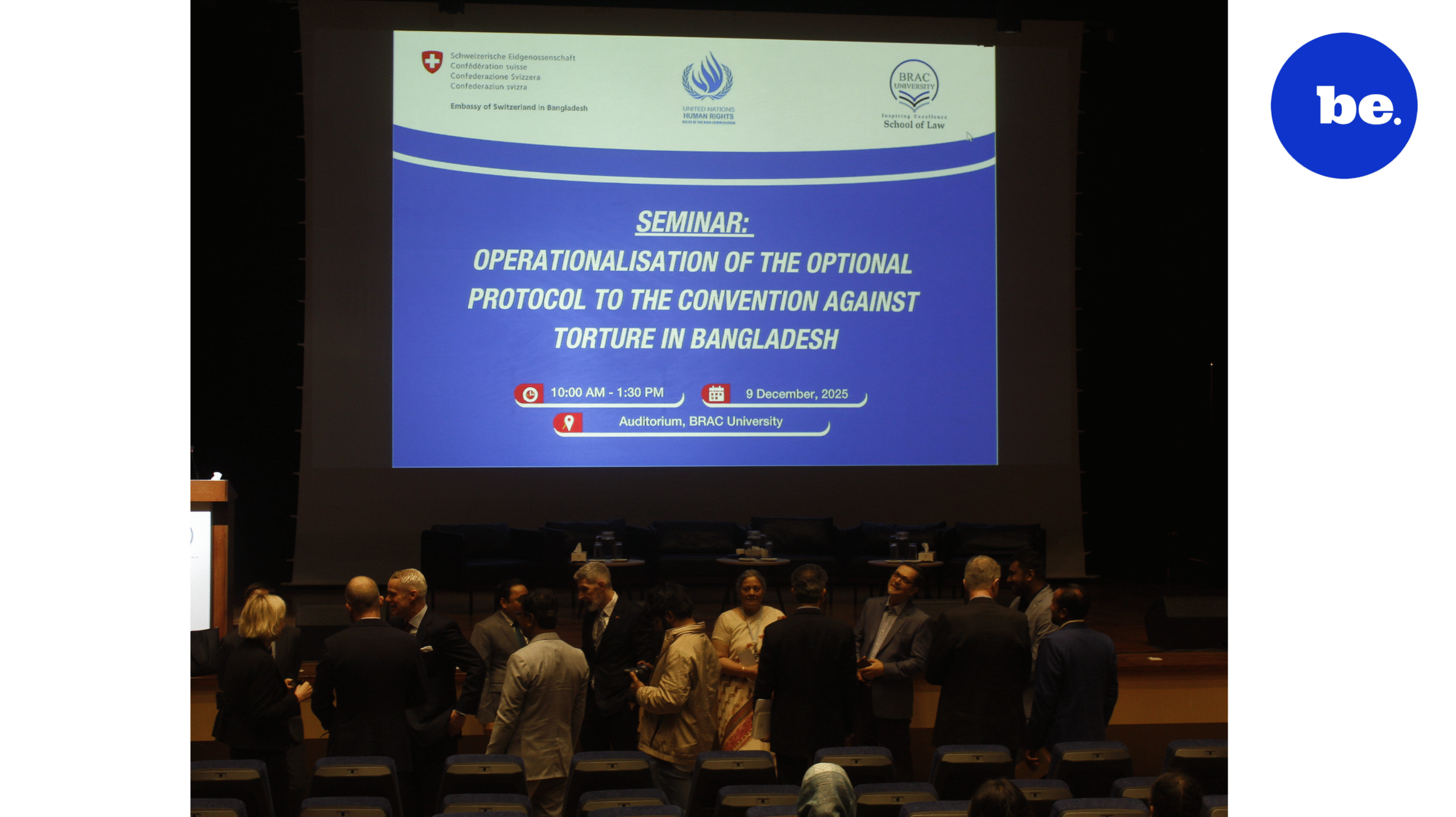
BracU School of Law (SoL), in collaboration with the Embassy of Switzerland in Bangladesh, and the United Nations High Commissioner for Human Rights (OHCHR) Mission in Bangladesh, organized a seminar on 9th December, titled “Operationalization of the Optional Protocol to the Convention against Torture (OPCAT) in Bangladesh.” The BracU auditorium was full of diverse stakeholders who engaged in an informed dialogue on how Bangladesh can implement OPCAT and what institutional mechanisms can reach the goal of safer detention through transparency.
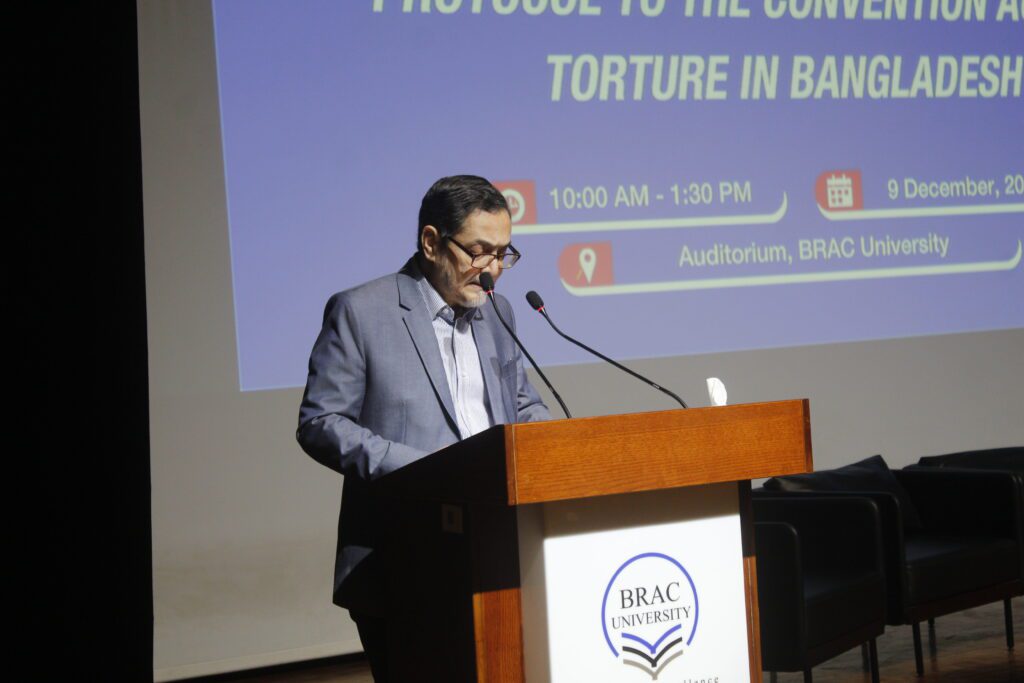
Photo: Saziya Khan Oshin
Bangladesh recently approved OPCAT, a UN human rights treaty that focuses on the prevention of mistreatment of people in detention. As intended, after joining OPCAT, a country must allow designated legal bodies to make unannounced visits, have private conversations with convicts, and review records where people are deprived of liberty, like prisons and detention centers. Against this backdrop, the arranged seminar focused on practical steps for implementation. The seminar had many important individuals speaking, starting with Professor K. Shamsuddin Mahmood (Dean, SoL), H.E. Reto Renggli (Ambassador, Embassy of Switzerland), Professor Arshad Mahmud Chowdhury (Pro Vice Chancellor, BracU), and Ben Buckland (Senior Adviser, Association for the Prevention of Torture), who shared the keynote address. They collectively stressed that upholding justice and human dignity requires moving beyond promises and fully operationalizing anti-torture laws and institutions.
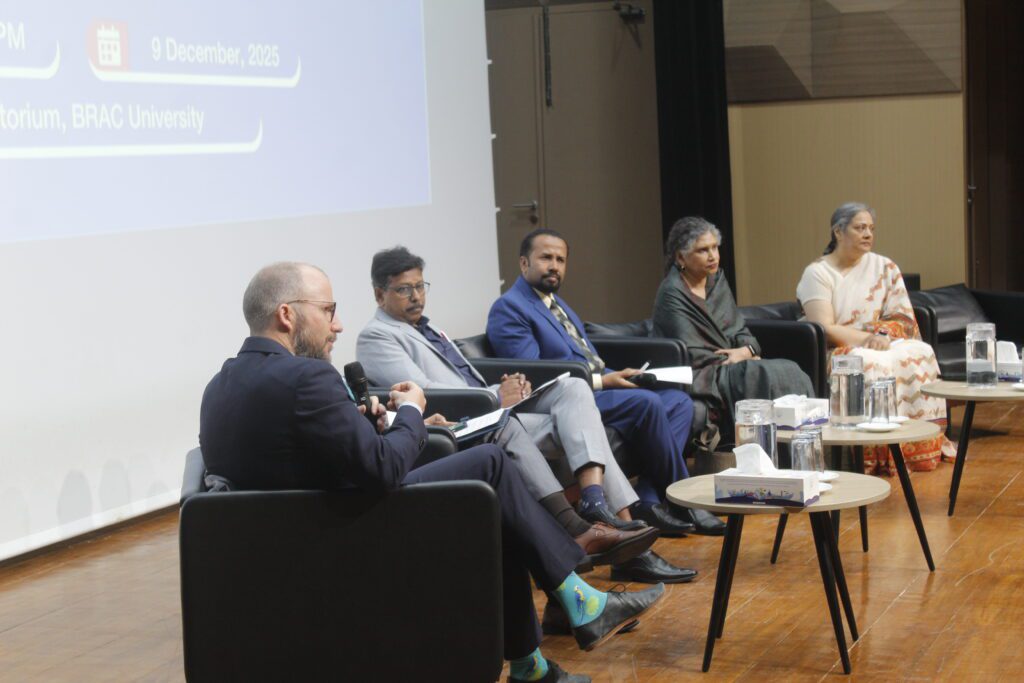
Photo: Saziya Khan Oshin
The panel discussion was moderated by Mr. Md. Mostafa Hosain (Assistant Professor, SoL). The panel members included Ms. Huma Khan (Head, OHCHR Mission), Mr. Md. Abdul Wadud Akanda (Director, United Nations Wing, Ministry of Foreign Affairs), Mr. Sazzad Hussain (Member, Commission of Inquiry on Enforced Disappearance), and Dr. Saira Rahman Khan (Professor, SoL). During the discussion, Dr. Khan highlighted an urgent need, saying, “Institutions are ineffective without true independence and political will, without which there will be no end to abuse,” as torture remains rampant in Bangladesh despite laws and international commitments.
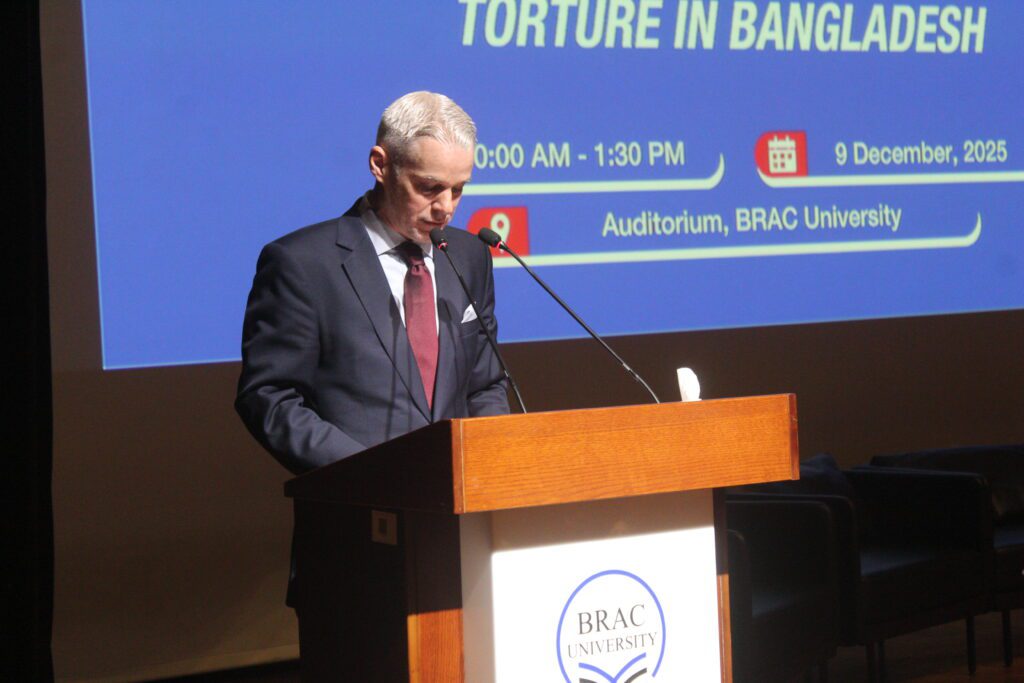
Photo: Saziya Khan Oshin
To conclude the event, Chief Guest Dr. Asif Nazrul (Adviser, Ministry of Law, Justice, and Parliamentary Affairs) brought positive news that the National Human Rights Commission Ordinance 2025 has been gazetted and the National Preventive Mechanism against torture will soon be constituted. He stated that, “The OPCAT ratification is not the end, but the beginning of a sustained journey, one that requires continued collaboration amongst all.”
Maisha Anika (Senior, SoL) said, “Discussions on legal loopholes are essential to shed light on for Bangladesh currently, given the context of the past year. Seminars like this with a more diverse and independent perspective serve as a valuable source for our criminal law studies.”