
Stony Brook University faculty reimagines the feminine spaces
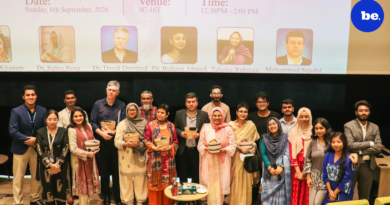
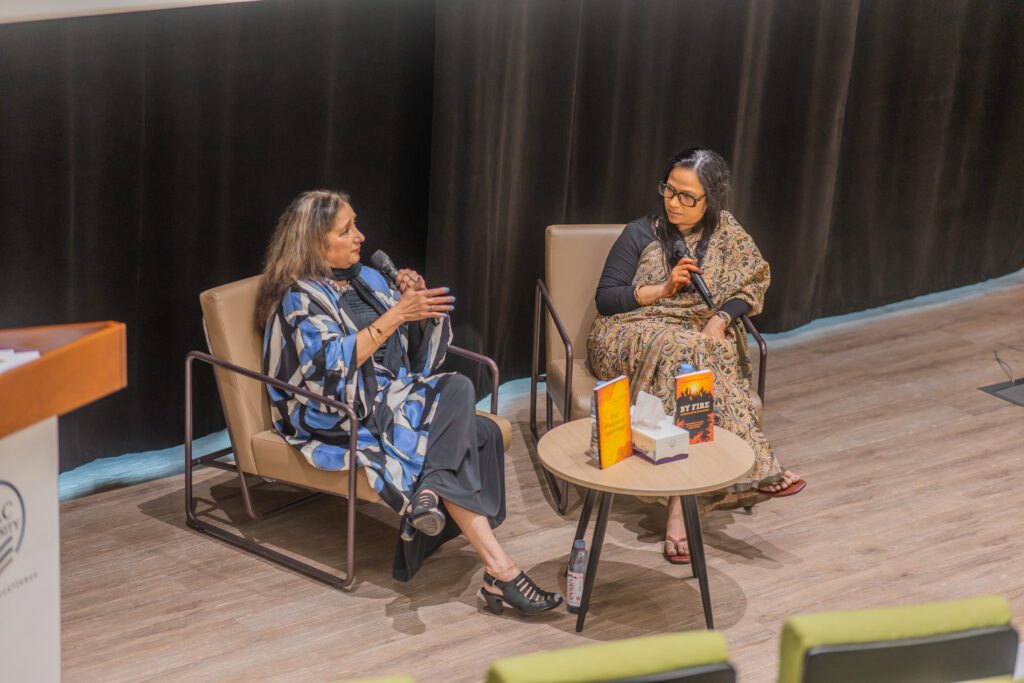
On December 18th, the Department of English and Humanities hosted a faculty research lecture by Dr Rita S. Nezami (Advanced Senior Lecturer, SUNY Stony Brook, USA), with Roohi Andalib Huda (Assistant Professor, ENH) serving as the coordinator. She shared, “I was very excited to coordinate the lecture as I had visited Morocco earlier this year.” She had also previously coordinated another talk by Dr. Nezami back in 2018.
The discussion revolved around her research on the flat rooftops in Morocco titled “The Rooftop: A Culture-Specific Feminine Space in Muslim Society”. These rooftops are said to be one-of-a-kind feminine spaces that serve both as an escape from the male gaze and a serene corner for work. Dr Nezami herself travelled to the medinas, the walled quarters of a city, of Tangier, Rabat, Marrakech, Fez, and Meknes. She engaged with women from all social classes, which further enriched her research. Interestingly enough, she pointed out the effects the erasure of these spaces results in. As old riads, traditional Moroccan houses, are now transforming into luxurious houses, these urban women are deprived of any space to call their own, away from the interdictions imposed by men.
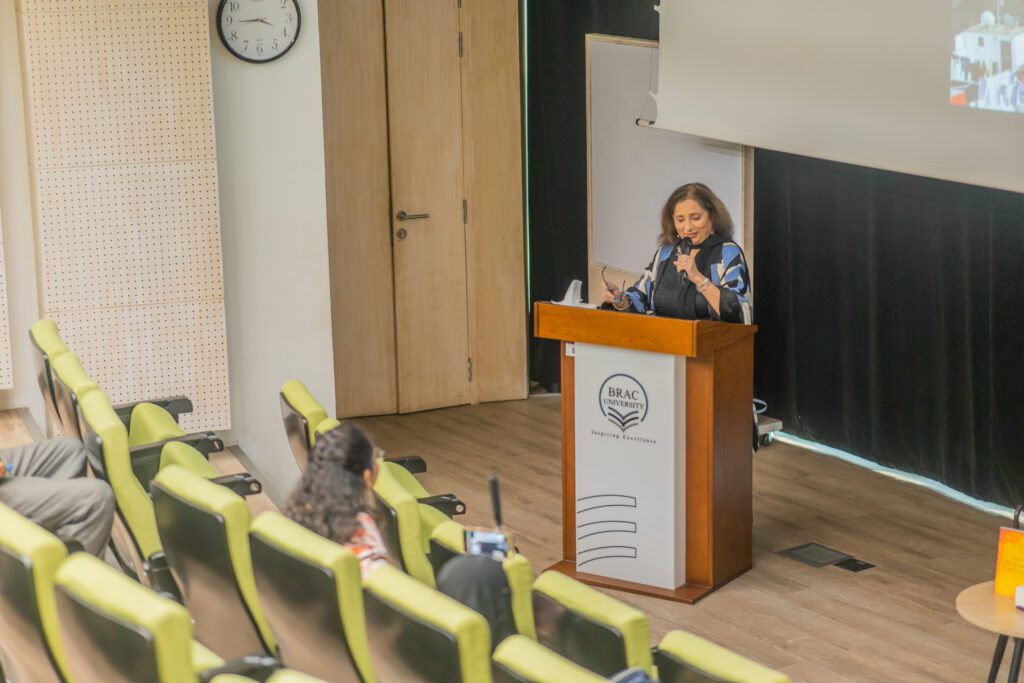
Dr Tabassum Zaman (Associate Professor, ENH) was the discussant before opening the floor for the question-and-answer session which highlighted a myriad of nuances almost alien to us Dhakaites, or South Asians for that matter. Rooftops here are usually a space for all kinds of people. It is a playground for kids and a shared space for young men to form their first friendships — everyone wants to claim it.
“It is an unwritten rule in Morocco that men don’t enter the rooftops; they are the designated place for women,” Dr Nezami remarked. For Moroccan women, these spaces offer a sense of freedom and joy; they socialise with other women from neighbouring rooftops. “Roofhopping was very common, and it has always been a feminine space,” she reaffirmed. This metaphoric journey to Morocco stirred a sense of nostalgia about the rooftops in Dhaka and all the myths surrounding it, as mentioned by Dr Firdous Azim (Chairperson, ENH). The imagery seems to be poetically fitting to the space she describes, even if the gendered meanings do not entirely align. Furthermore, Dr. Nezami stated, “The rooftop serves different purposes for women of lower and upper middle classes. It’s a space for both work and relaxation for the first and only for relaxation for the second.”
All in all, this discussion ensured that rooftops depart from the conventional definition of architectural extensions. Maisha Binte Salim (Senior, ENH) reflected “I will have my eyes out for rooftops after this lecture, to see how this space is occupied in our densely populated Dhaka.” Indeed, they are capable of holding the promise of independence, escape, and joy for women.