Why did we all learn the same chess opening growing up?
Most avid chess players were introduced to the sport by their parents, and if they were asked what the first opening they learnt was, it would most likely be the fianchetto. For whatever reason, this particular opening was widely popular amongst our previous generation, and to understand this phenomenon, we need to take a trip to the origin of chess and its historical relation to South Asia.
The fianchetto is a hyper-modern opening that involves deliberately giving up control of the centre, leading to exciting variations such as the King’s Indian Defence. Before the widespread popularity of chess as we know it today, there were Chaturanga and later Shatranj, and in these earlier versions of chess, the pawns were not allowed to move two squares from their starting positions. This meant popular openings such as e4 were not possible, and gaining control of the centre was a long, gruelling process; hence, the fianchetto was the only efficient opening. Eventually, as chess became popular in the rest of the world, standardised chess rules were adopted in the late 15th century, but the European update was largely ignored in the Indian subcontinent, and players continued to play with their traditional one-square-forward pawn rule well into the 19th century. This explains the phenomenon, as the fianchetto was likely carried down for centuries, leading to its popularity amongst our parents.
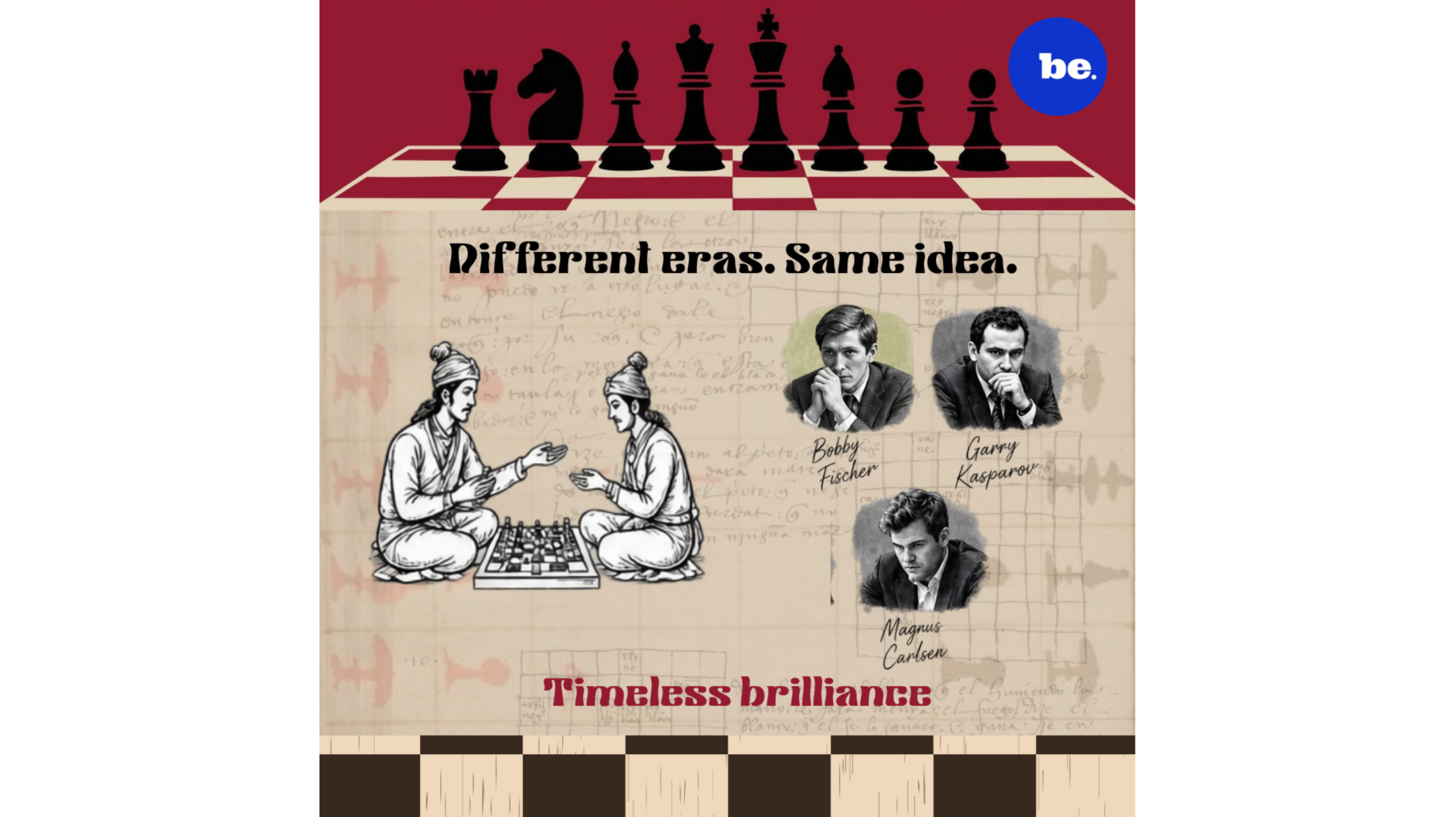
However, one would be wrong to assume that the ways of the old are not as effective today. In fact, the fianchetto is referred to as a “hyper-modern” opening largely due to the accounts of John Cochrane, who faced Bengali master Moheschunder Banerjee throughout the 1840s and 1850s. While Cochrane started off with the aggressive e4 and d4, Banerjee responded by fianchettoing his bishops, a setup that largely stunned the Europeans, leading to this flank development strategy being called the “Indian Defence”. Naturally, this style of opening became hugely popular amongst grandmasters around the world, with exciting games played by Bobby Fischer, Garry Kasparov and Magnus Carlsen.
It is, however, ironic that the opening which has been labelled “hypermodern” by the Europeans actually dates back to the origin of chess and its legacy in this region.