Legendary voices of the subcontinent that defined generations
From parents swaying to Lata Mangeshkar’s “Lag Ja Gale” to waking up on national holidays to Sabina Yasmin’s patriotic classic “Shob Kota Janala Khule Dao Na”, our earliest memories are musical. Parents often claim that the melody of the old songs is unmatched, and now it finally makes sense.
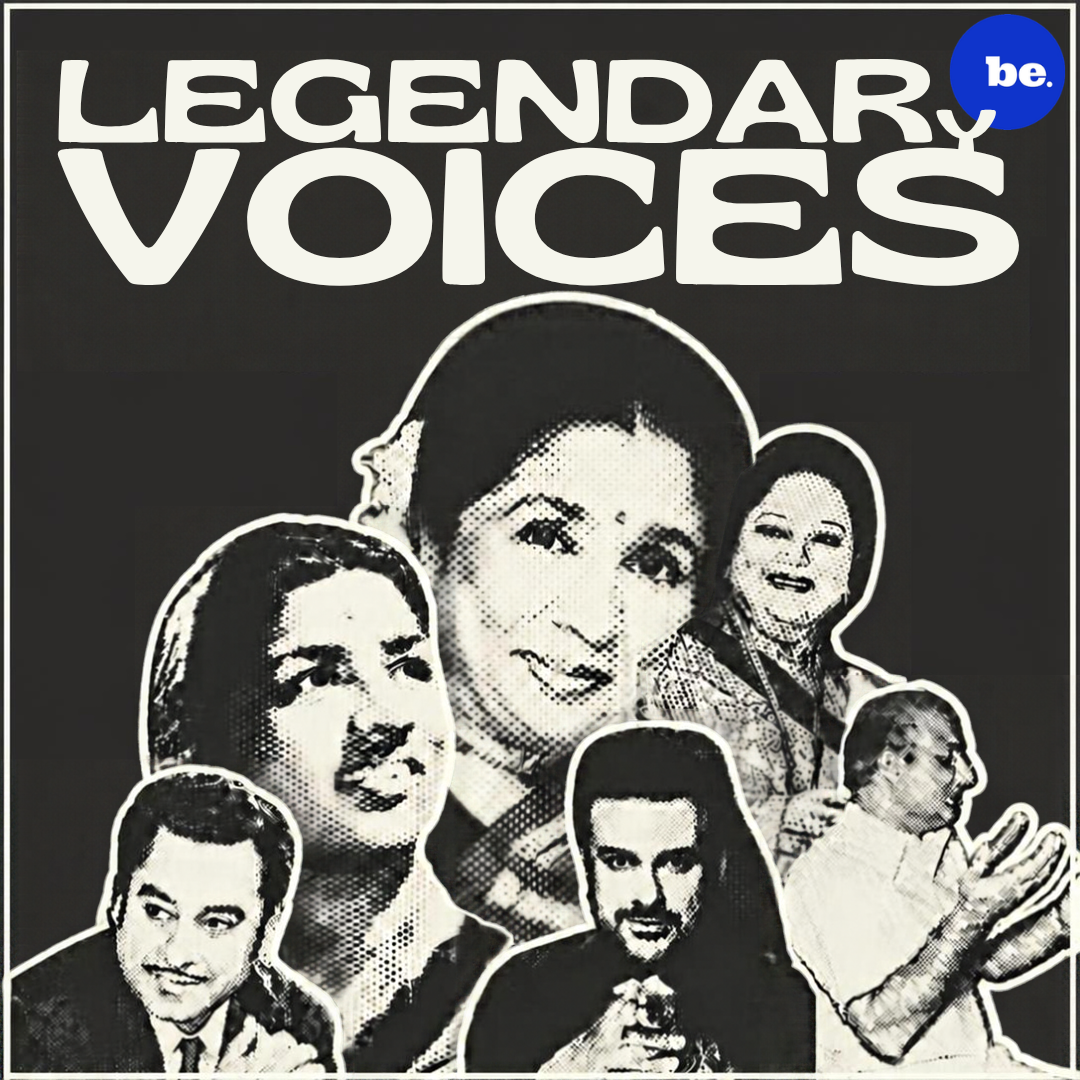
Sisters Lata Mangeshkar and Asha Bhosle ruled the industry for eight decades. Mangeshkar, the “Voice of a Millennium”, gave us countless hits. “Luka Chuppi”, a heartbreaking musical homage to a fallen soldier, remains the fan favourite. Bhosle, loved for her versatility, draws us with timeless songs like “Dum Maro Dum” and “Yeh Mera Dil”. Then there was Kishore Kumar, famous for his expressive style and yodelling, as in “Zindagi Ek Safar Hai Suhana“. Mohammed Rafi was a legend whose discography ranged from ghazals and qawwalis to patriotic songs. The Great Quartet shaped the Golden Era of Bollywood music.
Contemporary legends include Falguni Pathak; without her “Chudi Jo Khanki Haathon Mein” and “Maine Payal Hai Chhankai”, both of Gujarat’s Navratri and my playlist remain incomplete. Adnan Sami, a pioneer of Indian classical music on the piano, bewitches listeners with “Tera Chehra” and “Kabhi to Nazar Milao”. Beyond Bollywood, Noor Jahan, Pakistan’s Malika-e-Tarannum, built a six-decade career. The Punjabi folk-infused classic “Sanu Nehar Waley Pul Te Bulake” is ingrained in our playlists. Nazia Hasan, the Queen of South Asian Pop, rose to fame with masterpieces like “Aap Jaisa Koi” and “Disco Deewane”. At home, Bangladesh’s own legends raised a generation too. Runa Laila’s “Dama Dam Mast Qalandar” still fills a room with energy, while Samina Yasmin’s “Shudhu Gaan Geye Porichoy” lingers softly in the memory. Our rock icons gave the country anthems of their own: Ayub Bachchu with “Shei Tumi” and “Rupali Guitar”, and James with “Taray Taray” and “Kabita”. His voice travelled across borders, reaching Bollywood with “Bheegi Bheegi” and “Alvida”.