Dr Firdausi Qadri shapes public health through vaccine research
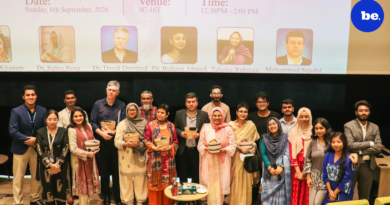
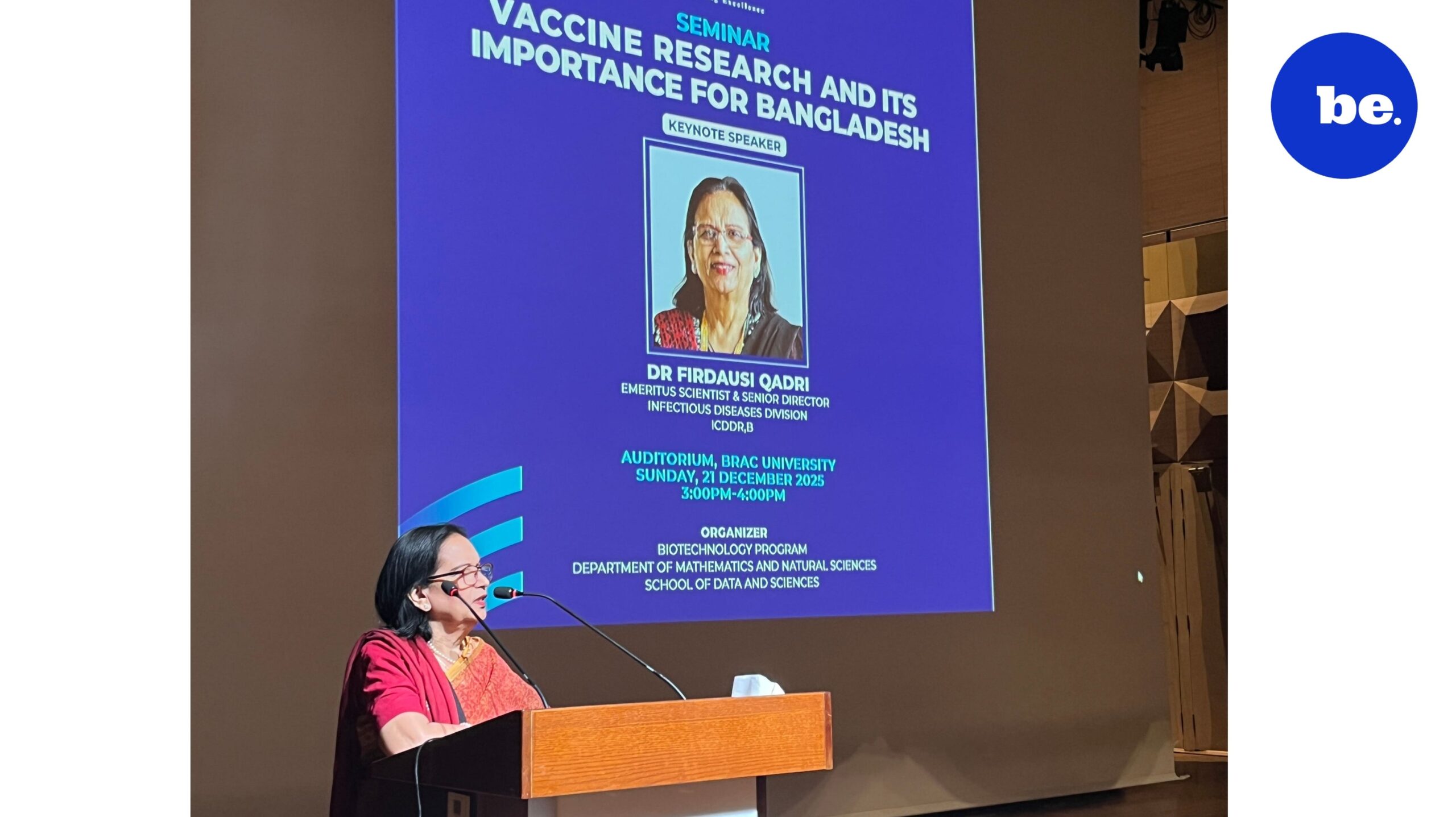
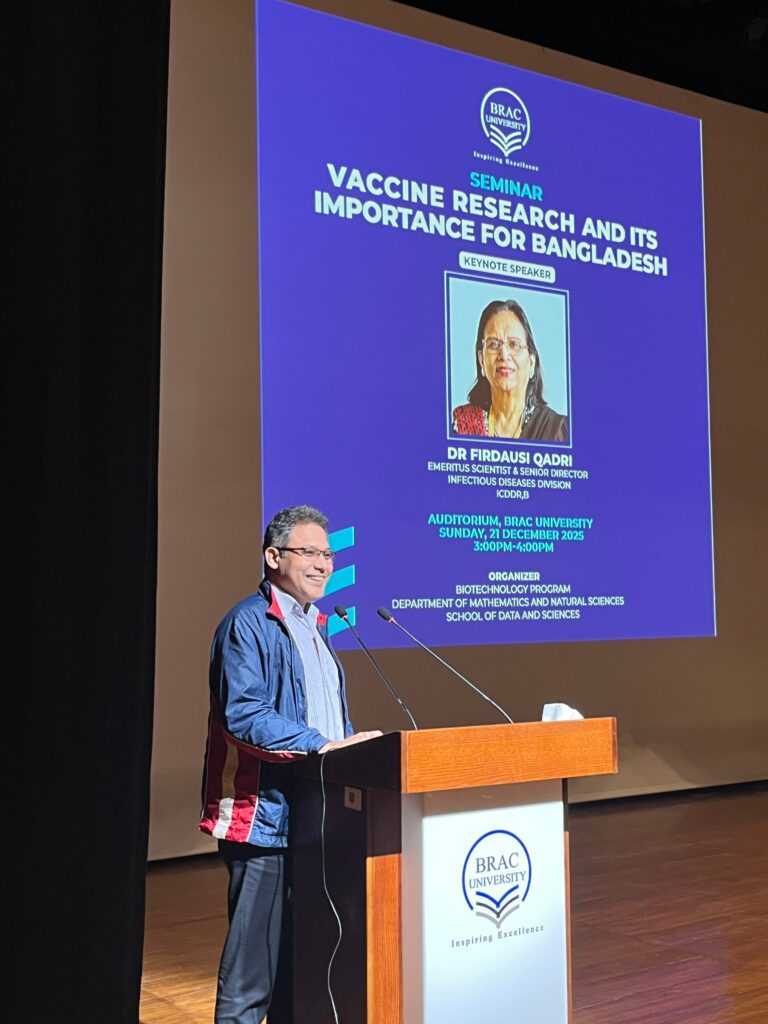
On 21st December, the Biotechnology program of Brac University held an academic discussion, titled “Vaccine research and its importance for Bangladesh” with Dr. Firdausi Qadri (Head, Mucosal Immunology & Vaccinology unit, ICDDR,B). Her work has had an impact on vaccine research and public health policy at the both national and international levels. Professor Arshad Mahmud Chowdhury (Pro Vice-Chancellor, BracU) presented the introductory speech and greeted the attendees. The session was also attended by Dr. Md. Firoze H. Haque (Chairperson, MNS) and Professor A F M Yusuf Haider (Acting Dean, SoP).
Dr. Qadri’s discussion focused on how climate change, environment instability, population density and humanitarian crisis are raising the danger of infectious diseases in Bangladesh. Rising temperatures, flooding and water contamination continue to accelerate the spread of cholera and typhoid, particularly among the vulnerable communities. She pointed out that vaccines are still one of the most effective preventing methods for large scale epidemics in this context.
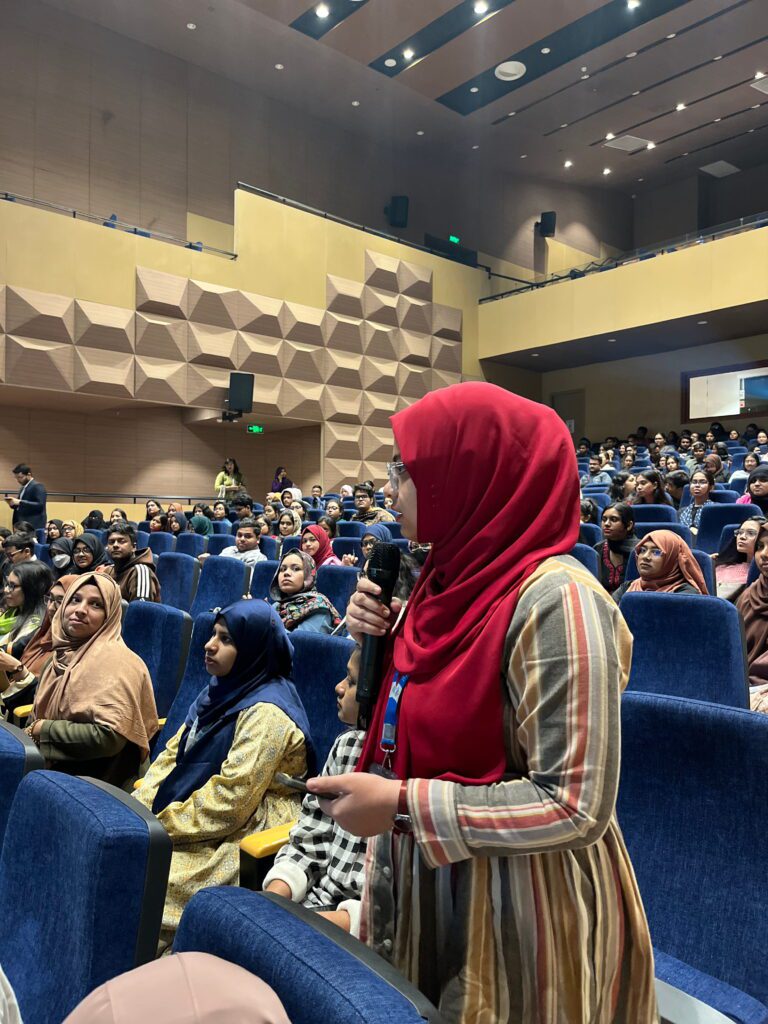
The session highlighted how scientific research carried out in Bangladesh has influenced national health policy and vaccination initiatives outside of laboratories. Oral cholera vaccines (OCVs) have successfully prevented major epidemics during emergencies like the immunization of Rohingya refugees. Along with this, the typhoid conjugate vaccine (TCV) has been also included in national vaccination programmes, reaching millions of people nationwide, proving an excellent protective efficiency for our country.
Addressing the challenge in vaccine research, Dr. Qadri stated that, “One of the difficulties is to make people understand why vaccines are needed. Along with scientific innovation, community engagement and ethical responsibility is also needed to ensure a successful vaccine program.”
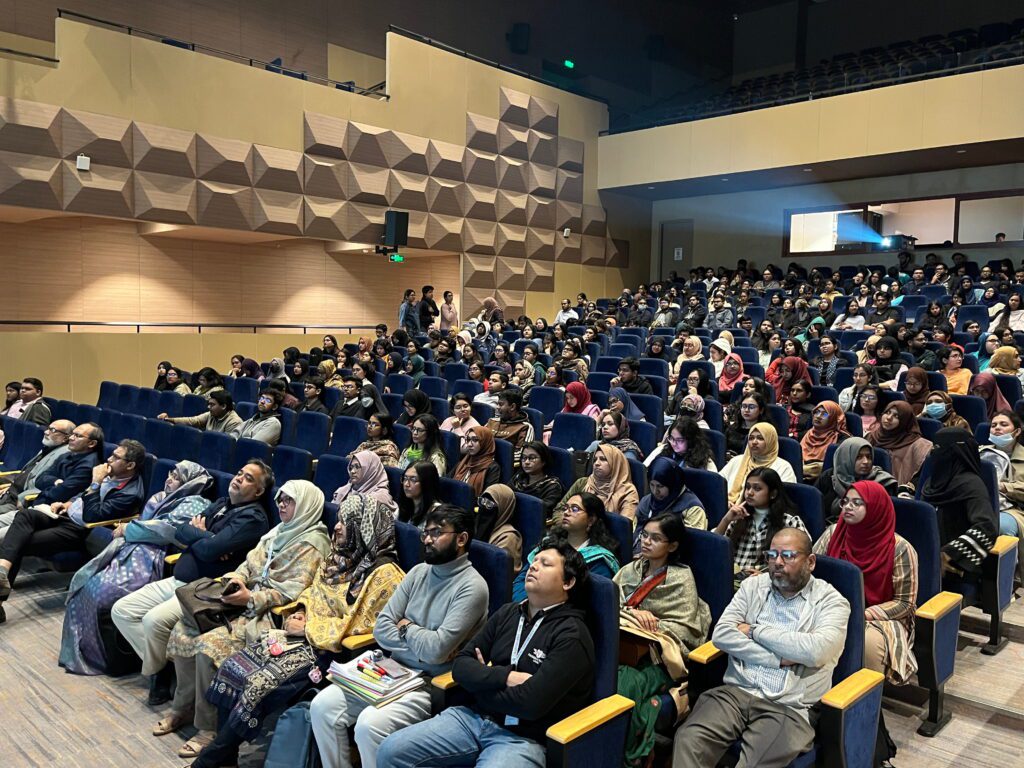
Concluding the seminar, Dr. Mumina Haque (Associate Professor, MNS) quoted, “The discussion pointed out how interdisciplinary research can come together to create a meaningful change.”
For students of biotechnology, microbiology, data science, life science and public health, this session provided an engaging conversation, demonstrating the importance of vaccinations as one of the most powerful weapons for protecting public health in Bangladesh. Afroza Afrin Sukanta (Sophomore, MNS) said, “It was very inspiring to hear how scientific research works in real life, creating a severe impact on public health and also gave a motivation for future scientists like us to work beyond imagination to actually make a difference.”