The Liberation of Bangladesh: A curated reading list
In this month of independence, as we navigate new leadership, new systems, and the hope of a new Bangladesh, we also reflect on a time when the people of this land finally breathed the air of freedom, while mourning lost lives, lost time, and shattered peace. These books help us return to the reality of 1971 and reconnect with the painful yet proud history of Bangladesh’s birth.
- “Ami Birangona Bolchi” by Nilima Ibrahim: A memoir published in two parts with a collection of stories of several women who were abducted, tortured, and sexually abused by war criminals and their collaborators.
- “Jahannam Hoite Biday” by Shawkat Osman: A novel that showed the beginning of the war, its moral aspects, and the preparation of ordinary civilians during the first two and a half months, showing how war truly feels like a real-time hell.
- “Dui shoinik” by Shawkat Osman: A critiqued short story that shows that even though humanity exists among enemies, two soldiers of opposite sides are victims of a political conflict they did not create. Consequently, war destroys their human values, causing unnecessary suffering.
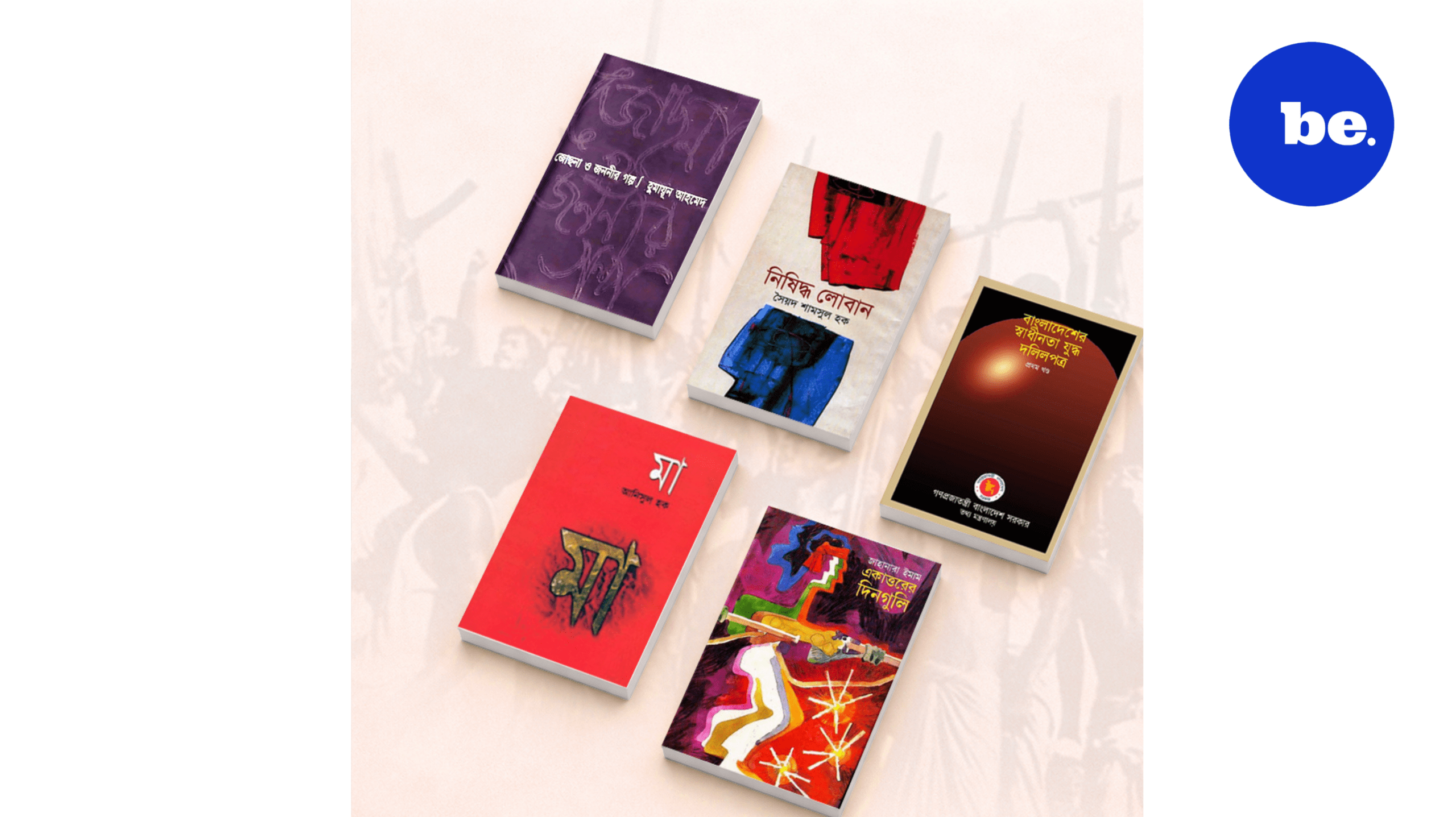
- “Ekatturer Dinguli” by Jahanara Imam: One of the most authentic first-hand personal accounts of the liberation war, written as a diary. The author’s son, Rumi, joins the war, and his family faces fear, tension, and hope, depicting the sufferings of ordinary people affected by war.
- “Jibon O Rajnoitik Bastobota” by Shahidul Zahir: A portrayal of post-independence Bangladesh, focusing on a small neighbourhood and the perspective of ordinary people and their lives, hopes, and dreams shaped by sociopolitical reality.
- “Ekattorer Jishu” by Shahriar Kabir: An old church caretaker’s experience of living a peaceful life in a small village invaded by war. A life of caring for the community of fishermen and marginalised folk turns into caring for freedom fighters and watching them being crucified like Jesus Christ.
- “Amar Bondhu Rashed” by Zafar Iqbal: A fictional novel narrated by Ibu, recollecting the memories of a brave and politically aware school friend, Rashed, and how he quickly became a leader among his classmates and helped in organising Mukti Bahini.