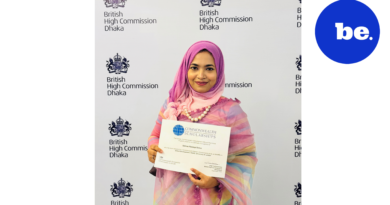

Reimagining Heritage: Fatiha brings global honour to Bangladesh
Fatiha Tanjim Oni (Alumna, SoAD) has recently represented Bangladesh internationally by winning at the World Architecture Community Awards 53rd Cycle. Her thesis, ‘Beyond Rediscovery: Reclaiming Alijan Jute Mill as a Living Productive Landscape,’ is one of the strongest examples of how locally rooted ideas can find their echo globally.
The inspiration of Oni has its roots in a personal recollection. She reminisces, “My initial visit to the deserted Alijan Jute Mill was as a high school student in 2015, when I barely knew the historical and economic value of this place.” But the place remained in her mind, and created a query which would come to characterise her work: why do we abandon places of memory?
Fundamentally, Beyond Rediscovery is a challenge to traditional reactions to abandoned industrial locations. Instead of demolition, Oni suggests a living, adaptive model – a model that re-links heritage to community resilience. The key to this vision is a worker-centred approach. She stresses that the individuals who constructed and maintained the mill are vital in the narrative, and any significant intervention should start with them.
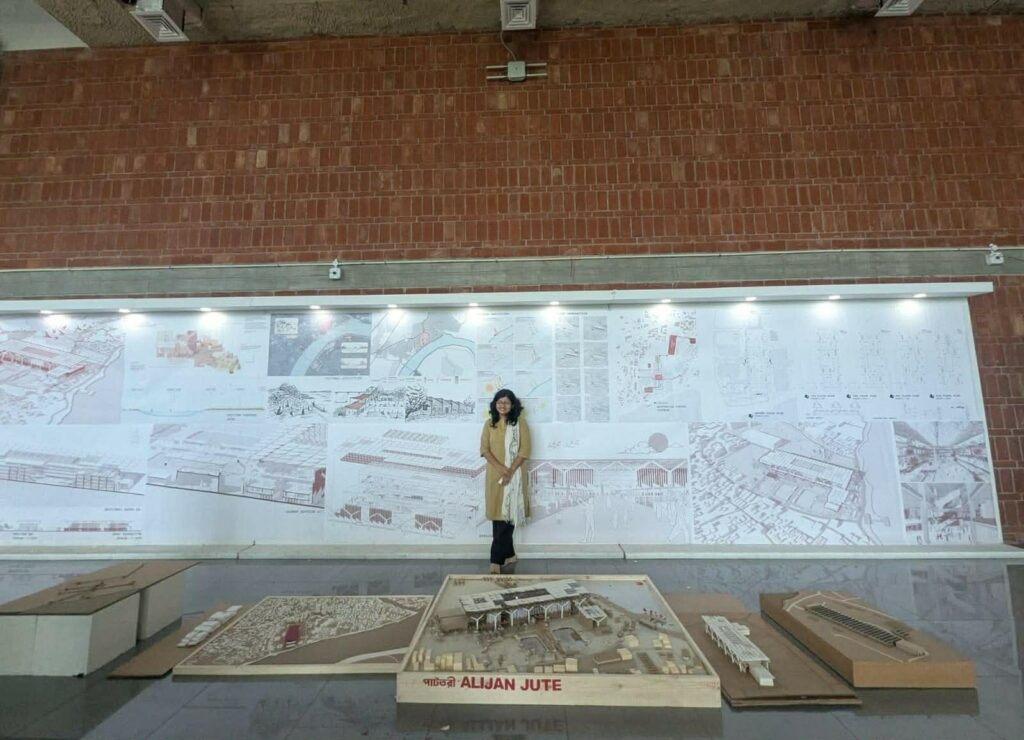
Under the concept of New Contextualism, her design interprets the site as a stratified system, social, ecological and historical, to turn it into a dynamic space of housing, production, and culture. The project not only tackles the increasing number of abandoned industrial locations in Bangladesh but also provides a model to be transferred to other post-industrial regions in South Asia.
To Oni, this global fame is personal and intentional. It confirms her belief in architecture as a means of social change. More to the point, it is a moment of pride to her institution and to Bangladesh, in general, to show that considered, context-based design of our land can influence discussions on an international level.