From Bar to Bench: Bishwajit’s Road to UTAS
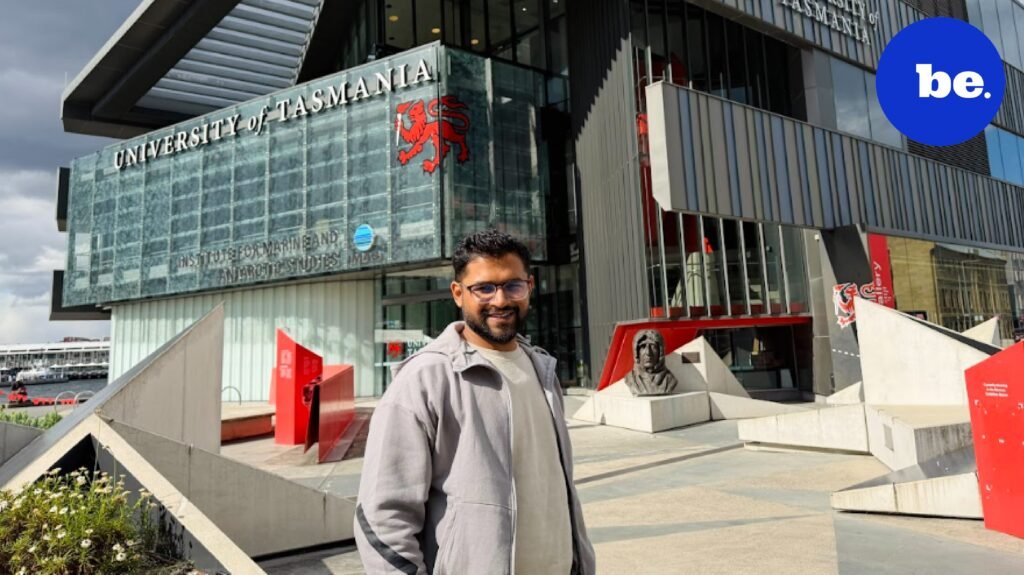
Bishwajit Ghosh (Alumnus, SoL) recently secured the prestigious, fully funded Australian Government Research Training Program (RTP) Scholarship to pursue a PhD in Law at the University of Tasmania (UTAS), Australia. For Bishawajit, the achievement reflected years of dedication and commitment. “I am excited to join the University’s Faculty of Law, which has an established research focus on environmental, Antarctic, marine and climate law, alongside international and public law”, he explains.
Previously, Bishwajit worked as an advocate at the Dhaka Judge Court and the Dhaka Bar Association. Alongside this, he researched climate justice and transboundary river governance. He also held lecturer positions at two universities- he has done it all. In his words, each experience has given him new perspectives. He believes his well-curated research proposal, paired with his academic background, teaching experience and previous publications, helped secure the scholarship. In his doctoral program, he wishes to carry forward meaningful research on environmental law and protection and contribute to an equitable future. “Research should not stop at identifying the gaps; it should also explore realistic ways to address them,” Bishwajit explains.

In photo:Bishwajit Ghosh
Photo credit:Collected
The same outlook shapes his view of Bangladesh’s Law. His framework for the missing Climate Change Act is simple yet potent: protect and involve vulnerable communities, ensure institutional accountability, and make climate justice accessible. On rivers, he believes domestic institutions cannot resolve transboundary disputes alone, but they can strengthen diplomacy. On plastic pollution, his concern lies with enforcement. Bangladesh has several regulatory measures, he notes, yet implementation and monitoring remain weak.
For Bishwajit, leaving students and colleagues behind was not easy. He hopes to return with stronger academic and research capabilities and contribute to legal education, environmental law research and policy discussions in Bangladesh. To aspiring researchers, he suggests looking beyond the classroom, because behind every environmental law are real people, and meaningful research begins with understanding their reality. What began with mooting in BRAC University Law Society has turned into a journey across continents, and for Bishwajit, it is, in his words, “the beginning of a new responsibility.”